
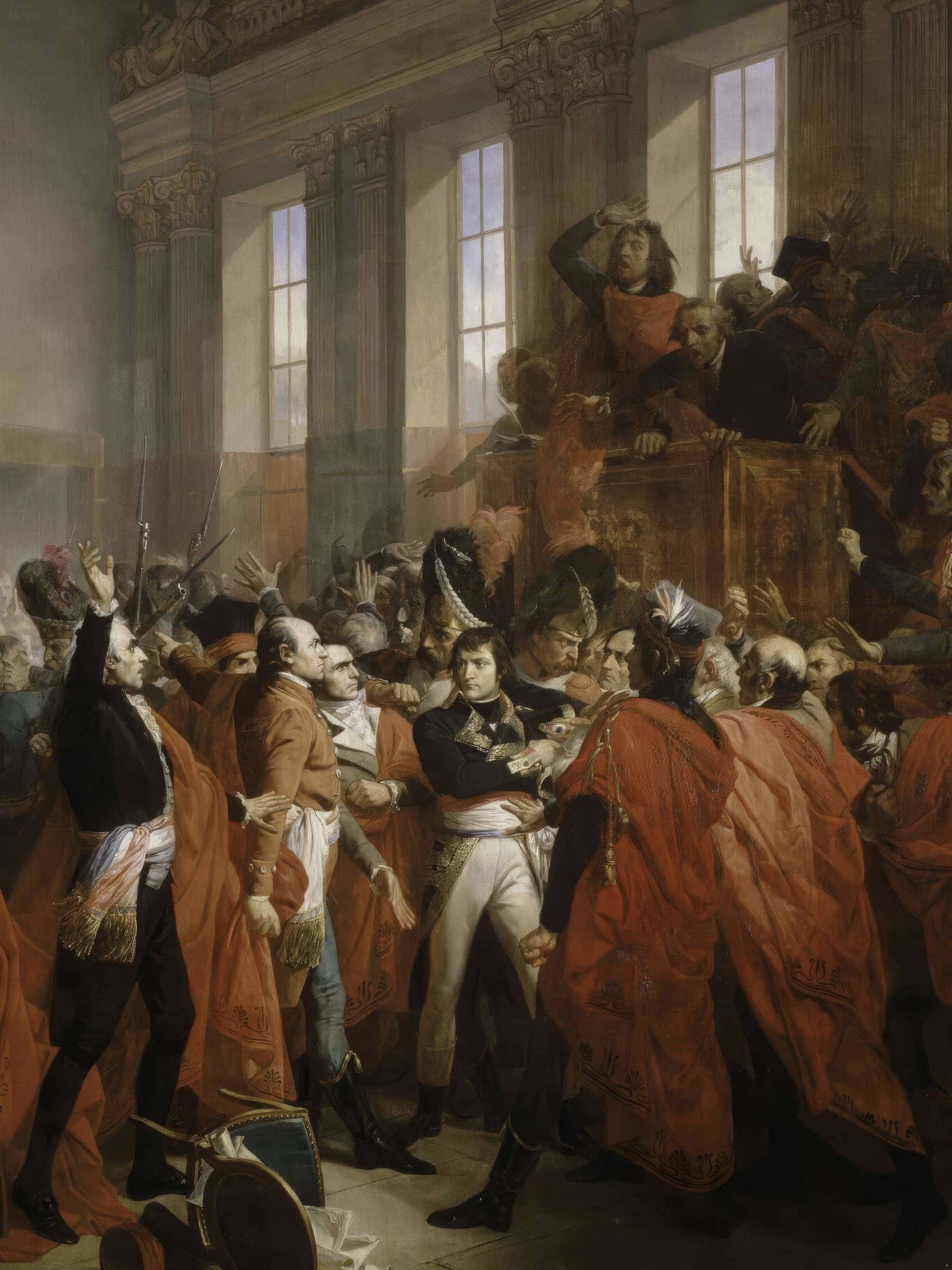

Stephen Shaw
Motivate 2026. Digital tempera-style painting.
‼️ Note: This video is restricted to members only: Join free to view this deep dive.
Part 1: Video Summary
Most buyers know what they want. Almost none of them can say it. Not the brief on the desk. The brief beneath it. Three layers down from what was written. Two layers below what most agencies can reach. Most agencies still read the brief. A smaller number read the buyer.
There is a story from 1786 that I think about often.
A young Corsican officer named Napoleon Bonaparte found himself in occupied territory with soldiers searching house to house. He was hidden by a Jewish tailor — under a bed, beneath the mattress — while bayonets came down through the cotton, inches from where he lay. The soldiers left. Napoleon escaped.
Years later, as Emperor, he met the tailor again and offered him any wish he wanted. The tailor asked one question. What did it feel like, lying under the bed, while the bayonets came down through the cotton?
What Napoleon said next is what I want to talk about.
He could have answered the way most of us answer questions about our worst moments. He could have said: I was afraid. Most market research, faced with a similar question about a buyer's interior experience, returns exactly that kind of answer — flat, generic, technically correct, and operationally useless.
Napoleon did not do that. He answered at the depth the question was asked. And the tailor — who had been there, who had hidden him, who knew the bayonets — recognised the answer as the real one. Here is what I have come to understand. The contract goes to the practitioner who, like Napoleon, is willing to return the question at the depth it was asked. Not to summarise. Not to flatten. To answer at the layer where the buyer actually lives.
That layer has a name. The work that surfaces it has a methodology. And most marketing has never been within a hundred miles of either.
The video is about both.
