
Stephen Shaw
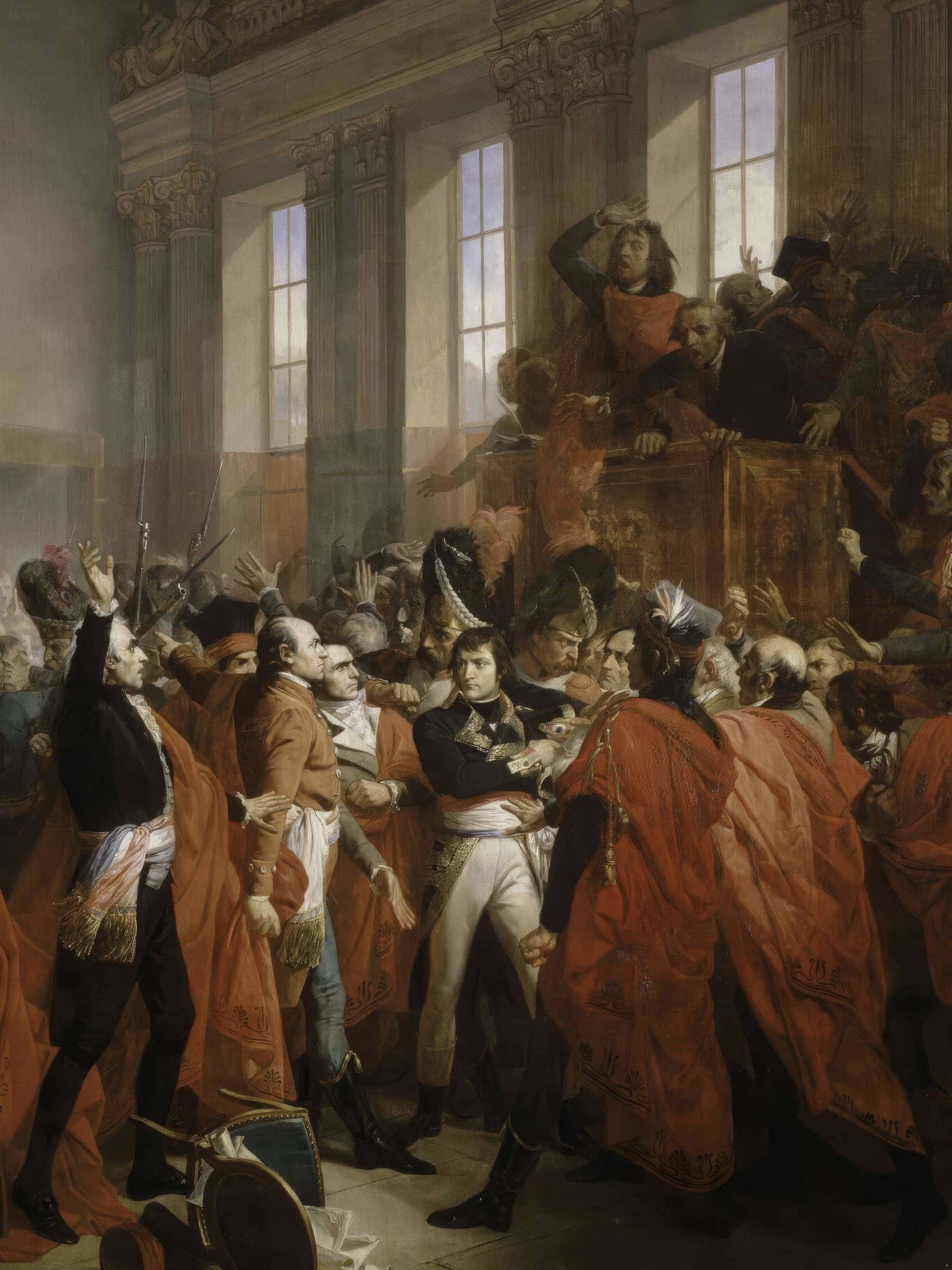
The Uniqueness Protocol 2026. Digital tempera-style painting.
Demolish First
Most positioning begins with refinement. The Protocol begins with category demolition.
What the demolition leaves standing is what the next capital can build on.
End The Pricing Defence
Pricing power that compounds. Cycle after cycle.
The premium holds — and the negotiation table moves elsewhere.
Codify The Method
Be Built On, Not Built Against. Be filed under your own name.
HubSpot codified the criteria. The market filed Marketo, Eloqua, and Pardot underneath them.
Service Definition:
Is your company structurally different — or merely better described?
A claim is easy to copy. What makes it true should not be. If the difference lives mainly in language, sharper positioning can make the business easier to understand without making it harder to substitute.
The Uniqueness Protocol™ is An Artful Science’s competitive differentiation and brand positioning service for founder-led professional-services firms whose expertise is valuable but increasingly difficult for buyers to distinguish.
The process begins by removing rather than refining. The Category Demolition Brief™ tests every claimed differentiator against the competitive set; what survives is tested for commercial value, codified into the Signature Path Map™, and ultimately captured in the IP Codex™ as proprietary methods, frameworks and category-defining assets.
The result is a business whose difference no longer depends on explaining itself better: buyers have something substantive to choose, pricing has something structural to rest on, and competitors have to build the capability rather than borrow the claim.
Prove it. Architect it. Own it.
It’s the most counterintuitive positioning beliefs: that the more clearly a company describes what it does, the harder it becomes to be remembered for it.
The framework has been gospel for forty years.
Sharpen the message. Refine the proposition. Clarify the differentiator.
Repeat.
Most of the time, the market doesn’t respond.
Clearer descriptions invite comparison. Clearer descriptions get filed against neighbours using similar vocabulary. Clearer descriptions accelerate the very flattening they were meant to escape.
This was Marlboro’s problem.

Stephen Shaw
This was Marlboro's problem. 2026. Digital tempera-style painting.
On the morning of April 2, 1993, the cigarette companies were the bluest of blue chips on Wall Street.
Marlboro had been the best-selling brand in the world for two decades — at its peak, holding nearly a quarter of the entire U.S. cigarette market.
For ten years, Philip Morris had raised Marlboro’s price by ten percent annually — more than double inflation.
For ten years, generic and discount brands — same blend, same regulatory regime, plain packaging — had been quietly absorbing share.
In 1982, they had been one percent of the market. By early 1993, they held thirty-six percent.
Marlboro had lost share six months in a row.
On April 2, Philip Morris cut Marlboro’s price by twenty percent to defend it. The market read the cut as admission. By the close of trading, $13.4 billion of market capitalisation had disappeared.
The day became known as Marlboro Friday.
The business schools have been teaching it ever since.
For forty years, the Marlboro Man had been treated as a structural asset. Leo Burnett’s cowboy. The frontier imagery. The rugged individualism. The market had priced it as proprietary.
The price cut revealed it wasn’t.
Same blend. Same tar. Same regulatory regime as Camel and Lucky Strike. The cowboy had made the cigarette feel different. The price war revealed it had never been.
The cowboy was excellent. It was also expression.
The two are not the same thing.

Stephen Shaw
Marlboro Friday 2026. Digital tempera-style painting.
The pattern was operating in software at the same time.
On a Wednesday morning in September 2005, Larry Ellison took the stage at Oracle OpenWorld in San Francisco and addressed an audience of thousands. He had news.
Days earlier, Oracle had announced its $5.85 billion acquisition of Siebel Systems — the dominant CRM platform on earth, with forty-five percent of the global market. The room applauded.
The trade press wrote it up the same week.
Oracle had its database. Oracle had its middleware. Oracle now had CRM. The application stack was complete.
Ellison told the audience this would be Oracle’s last major acquisition for some time. The category had a king. The stage. The applause. The narrative of completion.
It was a strategy. It was what winning in enterprise software was supposed to look like.
It was also expression.
Twelve years earlier, the cigarette industry had stood at this height. Marlboro Friday had revealed what was underneath.
The question is, what was underneath Oracle?

Stephen Shaw
What was underneath Oracle? 2026. Digital tempera-style painting.
Across San Francisco, in a rented apartment, three engineers had spent six years building something else.
There was no stage. There was no acquisition. There was no completed stack. Just quiet, compounding work on four things:
- A cloud-delivery model that eliminated software installation entirely.
- An AppExchange marketplace where third parties built products on the platform.
- A training program called Trailhead that would certify hundreds of thousands of administrators.
- A customer conference called Dreamforce, which would become one of the largest tech gatherings on earth.
Each piece was engineered. Each piece was owned.
While Oracle assembled. Salesforce compounded.
Oracle’s $5.85 billion bought it a company. It did not buy it a category. Siebel’s technology became an Oracle product line.
The 45 percent market share did not survive the integration. Siebel was filed under software.
Meanwhile, Salesforce amplified.
By 2013, it was the largest CRM company in the world. By 2022, it had passed SAP to become the largest enterprise software company.
The market did not file Salesforce next to Siebel. It commissioned Salesforce on its own terms.

Stephen Shaw
Oracle assembled. Salesforce compounded. 2026. Digital tempera-style painting.
Markets are not shortlist generators. They are filing systems. They file what they cannot structurally verify.
The market isn’t hostile to difference. It is administratively impatient with it. The shortlist conversation begins with the company already classified.
That’s the replaceability problem.
The conventional answer has been: hire someone to describe the difference more clearly. Sharpen the message. Refine the proposition. Repeat.
The question isn’t which consultant will help describe the difference better. The question is whether the difference being described is structurally real — and, when it’s not, what the architecture that replaces it looks like.
Expression refines the frame the market files inside. Architecture replaces the frame altogether.

Stephen Shaw
Expression refines the frame the market files inside. Architecture replaces the frame altogether. 2026. Digital tempera-style painting.
The Uniqueness Protocol™ interrupts the compression before the buyer’s mental model sets.
Not by refining the message.
By testing whether the differentiation is structurally real, and by producing the architecture that makes the company structurally unreplicable rather than confidently described.
Confident differentiation gets compared. Structural differentiation gets commissioned.

2. Pick Where Margin Compounds
The Profitable Client Index scores 3–7 micro-niches on contribution margin, LTV and influence — replacing the "ideal customer" fantasy with the segments that compound margin.

3. Protect Pricing Power
Anchor pricing in the architecture beneath it — not in the language describing it. When the difference is structural, price stops being a quarterly negotiation.

4. Build Only What Survived
The Category Demolition Brief eliminates 50%+ of claimed differentiators before any positioning is built. What survived is structural, mechanism-level, and the only foundation worth investing in.

6. Become Irreplaceable
Exit the shortlist before competitors flatten the difference. When distinction lives at mechanism level, substitution becomes structurally impossible — not just commercially inconvenient.

5. Own The Recipe
The Signature Path Map codifies a 9-step proprietary progression. Competitors can see every ingredient — and still cannot reproduce the recipe.

1. Outlast The Sameness
Survive the test most positioning has never faced. The Residue Test strips the branding, the language, and the explanation — what remains is the only differentiation AI cannot reproduce.
Confident differentiation gets compared. Structural differentiation gets commissioned.
The Uniqueness Protocol
From refining the message in hope of market recognition — to owning IP the market commissions on its own terms.

Stephen Shaw
Confident differentiation gets compared. Structural differentiation gets commissioned. 2026. Digital tempera-style painting.
Clarify Reality
Observer → Investigator
Diagnose what is theatrical and what is structural.
Rewire Logic
Investigator → Architect
Engineer what competitors can see but can't reproduce.
Encode Advantage
Architect → Author
Be authored as the category, not categorised within one.

Tier 1 — A perceptual map ranks every rival on the same axes. The win is the axis they are not on.
The Category Demolition Brief
The Category Demolition Brief™ is the opening audit that plots every differentiation claim a business makes across the competitive landscape and tests each against five quality gates — striking the ones that don't survive, typically more than half. What remains is the positioning map worth defending.

Tier 2 — Customer segmentation asks who to serve. Strategy is deciding who to turn away.
The Profitable Client Index
The Profitable Client Index™ is the market segmentation that ranks buyers by the margin they compound, not the revenue they book — an ideal customer profile built on profit, so a business can choose the client worth building the entire model around.

Tier 3 — Consumer psychology explains what buyers say they want. This finds what they cannot say.
The Buyer Psychology Dossier
The Buyer Psychology Dossier™ is the buyer-behaviour profile beneath the brief — the failure a client fears but will not say, and the decision they are actually making. It reaches past the buyer persona to the ground a rival competing on stated needs can never reach.

Tier 4 — Pricing power is not a pricing strategy. It is the absence of a negotiation.
The Opportunity Ledger
The Opportunity Ledger™ is the map of where verified difference converts into value-based pricing — the points at which a hard-to-copy advantage lets a business set the price rather than meet it, turning differentiation into a pricing strategy rivals cannot match.
Tier 5 — A value proposition describes what a business offers. This rebuilds what it is.
The Transformation Grid
The Transformation Grid™ is the value proposition rebuilt as a system — a grid mapping how one difference reshapes a business's service, economics, and category so they reinforce each other. It is category design turned inward: not a better offer, but a different market to lead.

Tier 6 — A brand story makes a business memorable. This makes it the only logical choice.
The Narrative Arc Blueprint
The Narrative Arc Blueprint™ is the brand narrative built as an argument — the sequence that moves a buyer from their starting belief to the conclusion that a business's position is the only one that fits. It is storytelling in service of structure, not spectacle.
Tier 7 — Productization turns a service into a product. This turns a method into a moat.
The Signature Path Map
The Signature Path Map™ is the productization of a business's method — its way of working set down as a named sequence whose steps reinforce each other, so a rival copying one still cannot copy the whole. It makes a productized service teachable across a team and founder-proof.

Tier 8 — Brand architecture organises what a business sells. This organises what only it can.
The Breakthrough Portfolio
The Breakthrough Portfolio™ is the brand strategy for scale without dilution — the architecture that extends a business's advantage into new offerings without making it comparable again. It is competitive strategy as structure: growth that deepens the moat instead of trading it away.

Tier 9 — Intellectual property strategy protects what a business has made. This owns how it thinks.
The IP Codex
The IP Codex™ is the intellectual property strategy that turns a business's verified difference into owned assets — the frameworks, systems, and category-defining terms that make its way of thinking legally and commercially its own, and inheritable by whoever leads next.
The Uniqueness Protocol is the instrument. Each beat compounds the one before it..
DEMOLISH (what is theatrical) → DIAGNOSE (where margin compounds) → READ (the unspoken decision) → LEVERAGE (verified difference) → REFRAME (the category itself) → PERSUADE (before the question is asked) → CODIFY (the recipe) → EXTEND (the architecture) → CONVERT (into property).
The work begins with demolition. The legacy ends with filing — under the company’s own name, not theirs.
Everything in between is the architecture of category authorship.
Scroll →
Brand Positioning Services, Naming & Rebranding Agencies (e.g. Landor · Wolff Olins · Interbrand)
Positioning & Category-Design Methodologists (e.g. April Dunford · Marty Neumeier · Al Ries & Trout)
Messaging Frameworks (e.g. StoryBrand · Donald Miller)
DIY & AI Tools (e.g. Copy.ai · Jasper · Value Proposition Canvas)
The Uniqueness Protocol™ — Prove it. Architect it. Own it.
Verify Before Committing
You're buying credibility. Brand platforms, positioning decks, stakeholder interviews, capital-allocation logic, transformation roadmaps — deliverables that carry the firm's reputation and land at senior level. The work begins from the company's existing strengths and finds the strongest articulation of them. It does not begin by asking whether those strengths still survive the competitive frame. The diligence happens around the position, not on it.
You're buying context. Competitive-alternatives mapping, primary-value framing, market-category sketching, and best-fit profiling locate the offering against its peers. The methodology is consistent, the output legible. The framework assumes the differentiation already exists at mechanism level — its job is to find the right angle to describe it. The positioning gets more legible. Whether it gets more defensible is a different question.
You're buying clarity. Customer-as-hero structure, problem-guide-plan sequencing, one-liner construction, and narrative-arc templates make the offering legible to the buyer. That helps when confusion is the problem. It can also make the offering easier to compare the moment the message becomes easier to grasp — clearer messaging reveals weaker differentiation, not stronger.
You're buying speed. Brand templates, AI prompt libraries, positioning generators, and value-proposition canvases produce output in hours. The framework is consistent, the methodology defensible. The output is also structurally identical to what every other organisation using the same tool has just produced. Confident sameness at scale.
Marlboro Friday wasn't a brand crisis. It was a verification event the company had never run on itself. The day a generic brand offered the same blend at twenty percent less, the market ran the test the industry hadn't — and $13.4 billion of market capitalisation disappeared by the close of trading. The Uniqueness Protocol™ runs the test before the market does. The Category Demolition Brief™ catalogues every differentiation claim and tests each one against the competitive set. What survives is not a sharper articulation of the difference. It is the verified architecture beneath it. You are not buying positioning help. You are buying the test the market has not yet run on you. The premium without architecture is the premium without warning.
Read The Buyer Where The Decision Actually Happens
You're buying executive interviews. Stakeholder mapping, voice-of-customer aggregation, and decision-maker workshops capture what leaders say they want. The synthesis is professional, the stakeholder coverage broad. The work captures what leaders are willing to articulate in a room — which is not always what they are quietly protecting. Identity-tier concerns rarely surface in interviews where the leader is also being observed.
You're buying personas. Demographic-and-behavioural profiling, use-case mapping, and buyer-journey construction produce a recognisable archetype the team can target. The persona is useful. The methodology is consistent. Personas operate at the role layer — the role on the card. They don't reach the identity beneath the role, because the methodology wasn't designed to.
You're buying the hero archetype. Customer-as-hero positioning, problem-guide-plan narrative, and aspirational language give the buyer a story they can locate themselves inside. The arc is satisfying. The framework is universally applicable. The hero archetype is itself a surface frame — useful for narrative legibility, structurally distant from the failure narrative the buyer cannot say out loud.
You're buying buyer personas at speed. Behavioural-data clustering, sentiment segmentation, and AI persona generators produce defensible-looking profiles fast. The data is real, the clustering sound. The output is demographic-and-behavioural — the identity layer was never in the training data.
The spreadsheet is usually late to the crime scene. By the time the columns appear, the deeper sorting has already happened — not at the level of features, but at the level where the buyer quietly asks: "Which leaves me safest, most sensible, least exposed?" This is the altitude where decisions actually settle. Most positioning never reaches it. Not because the work is shallow, but because the engagement economics don't support the analytical investment required. The Uniqueness Protocol™ reaches it. The Buyer Psychology Dossier™ moves past the role, past the surface motivation — to the failure narrative the buyer cannot articulate even to themselves. You are not buying buyer research. You are buying the conversation the spreadsheet never reaches. The buyer who feels recognised at identity altitude does not arrive at procurement comparing.
Hold Pricing Without Re-arguing It
You're buying brand premium. Brand-investment logic, premium-pricing strategy, value-perception studies, and willingness-to-pay analysis anchor pricing to the brand's strength. The methodology is well-established. The premium holds as long as the brand investment holds. When the market compares on attributes the brand cannot translate to architecture, the premium becomes the negotiation's first casualty.
You're buying competitive pricing logic. Positioning-against-alternatives, category-relative pricing, and primary-value-pricing models calibrate the offering's price to the competitive frame. The methodology is rigorous, the pricing defensible relative to peers. When the category itself converges — and AI is doing that work across every category — relative position holds while absolute price collapses with the frame.
You're buying value-proposition clarity. Sharper articulation of what the buyer gets, clearer outcomes, tighter benefits. The clarity is real. The story lands. Better messaging on weaker structure makes the value comparison cleaner — accelerating the slide to price competition rather than preventing it.
You're buying benchmark pricing. Market-rate analysis, competitor pricing models, and AI-recommended price points anchor the offering to what the market is already paying. The recommendation is data-supported, the benchmark current. The recommended price is the price every operator using the same tool will recommend.
Markets do not always reject rarity. More often, they domesticate it. They behave like clerks, taking something singular and filing it under the nearest familiar heading. By the time price enters the conversation, the filing has already happened. The negotiation that follows is paperwork — paperwork that calls itself a pricing discussion. The Uniqueness Protocol™ interrupts the clerk's instinct before it begins. The Opportunity Ledger ranks where verified differentiation creates pricing leverage. The Transformation Grid™ converts that leverage into mechanism-level architecture the buyer reasons through, not against. The Signature Path Map™ codifies the executable progression that makes the architecture deliverable across teams and cycles. You are not buying pricing strategy. You are buying the frame that makes the premium look natural — not negotiable.
Build What Outlasts The Founder
You're buying institutional legitimacy. Brand platforms, identity guidelines, governance frameworks, and stewardship protocols give the team a documented standard to maintain. The standard exists. The investment is preserved. The strategic reasoning behind the standard lives in the consultant's memory and the engagement's working files. The next leadership cohort inherits the conclusion without the architecture that made it true.
You're buying current-context positioning. The methodology produces a positioning calibrated to today's competitive frame. The calibration is current, the framing sharp. Context is the methodology's foundation — when context shifts (and it does, on cycles shorter than tenure), the positioning shifts with it. The next leader inherits a position that fit the previous cycle.
You're buying portable messaging. BrandScript, one-liner, and customer-story templates produce messaging the team can deploy across channels. The templates are reusable, the voice consistent. The strategic logic that produced the messaging was never captured — only the output was. The next team starts from the messaging, not from the architecture beneath it.
You're buying searchable guidelines. Brand-management software, AI-templated decks, and centralised content libraries make the brand standard searchable across the organisation. The infrastructure is convenient, the standards documented. Guidelines describe what to say. They do not explain why. Institutional knowledge decays with each personnel change.
The most expensive form of differentiation is the kind that depends on its author. Three engineers in a rented apartment in 1999 built something that, by 2022, had become its own filed category. They left. New leadership took over. The compounding continued — not because the founders' voices still echoed, but because what they had built was institutional, not personal. Most positions live the way performances live: vivid in the room, weak in transfer. One leader leaves and the thing loses its spine. The IP Codex™ is the difference between a good speech and a governing text. The IP Codex™ produces Unique Systems, Proprietary Frameworks, and Category Replacement Statements — each one a codification of one piece of verified architecture into IP that is teachable, repeatable, and transferable across leadership cycles. You are not buying a brand book. You are buying the governing text — not the speech.
Marlboro Friday was the day the market tested Marlboro. The Marlboro Test runs that test on you first.
The Marlboro Test
The demolition. The signature. The codex. What survives the first becomes the material for the second, and the third makes it property.

Stephen Shaw
The Uniqueness Protocol 2026. Digital tempera-style painting.
Demolish The Category
Take The Marlboro Test. The diagnostic that determines whether the architecture is real, theatrical, or already filed. The first step is finding out.
Hesitation is rarely about the methodology. It is about what the methodology might find.
FAQ
Nine residual questions — and the structural answer beneath each.
Stephen Shaw
Marlboro Friday 2026. Digital tempera-style painting.
What is brand positioning?
Brand positioning is the place a business occupies in a buyer's mind relative to the alternatives — the category they are filed under, and the reason they would be chosen over the others in that file.
It sounds like something a business decides and then communicates. The harder question is what happens when the market tests it.
By early 1993, Marlboro had been the world's best-selling cigarette for decades and carried a premium of roughly ninety-three per cent over deep-discount brands. Nearly double the price. It was taught as the textbook case of a position no competitor could take.
Meanwhile discount share had gone from one per cent of the US market in 1982 to about thirty-six. Marlboro's own share had fallen through six consecutive monthly declines.
On 2 April 1993, Philip Morris cut the price by twenty per cent.
The stock fell twenty-three per cent that day, taking $13.4 billion off Philip Morris's market value — the largest one-day fall in a single stock since the crash of October 1987.
It took Coca-Cola, Procter & Gamble and most of branded consumer goods with it.
Then Marlboro recovered its share, and the stock was whole inside two years. The premium settled at forty to forty-five per cent and held there. What it could not hold was the other fifty points.
Part of that ninety-three per cent was a preference people would genuinely pay for. Part of it was the cowboy. Nobody inside Philip Morris knew the ratio until the market was asked to price it — and by then the question was being put by discounters, not by them.
Refinement makes a claim clearer. It cannot make a claim true.
Three sorts of difference get claimed.
- What the category requires of everyone.
- What merely sounds distinctive.
- What changes how a buyer thinks or behaves.
What is the Marlboro Test™?
The Marlboro Test™ is the entry diagnostic of the Uniqueness Protocol — the examination that determines whether a company's differentiation is structurally real or merely expressed. It works by demolition.
Every difference a company claims is set against the competitive reference set — the six to twelve alternatives a buyer actually weighs — and sorted into three: what the category already requires of everyone, what merely sounds distinctive, and what genuinely changes how a buyer thinks or behaves.
Only the last is a true point of difference; the rest is table stakes, or sameness dressed as distinction.
The work is closer to assaying than to editing — most of what is dug up is common rock, and the test exists to find the small seam that is actually gold.
Most claimed differentiation does not survive it; what remains is the only ground worth building a position on.
It is named for Marlboro Friday, 1993 — the day Philip Morris cut Marlboro's price to counter cheaper rivals, and the premium everyone believed was structural proved borrowed, vanishing in an afternoon. Most of what a company calls its difference is the price of entry, or theatre.
The Marlboro Test finds the part that is neither.
What does the Uniqueness Protocol™ deliver?
The test of a positioning engagement is what a company owns when it ends. Most produce language — a sharper way to describe the business, which a competitor can echo by next quarter.
The Uniqueness Protocol™ produces property instead: it is a structural differentiation process that tests whether a company's difference is built into the business, rebuilds it where it is not, and leaves the business a competitive advantage it owns rather than rents — named intellectual property: a proprietary method, a Category Replacement Statement, a codified body of work that survive personnel change and outlast positioning cycles.
Whether a company's difference is already real or has to be built, the Protocol tests it before it constructs it, because a position held without structure is a claim waiting to be re-filed.
Positioning consultancy produces messaging. The Uniqueness Protocol™ produces property.
Our brand positioning was refreshed 18 months ago — why now?
A market positioning refresh calibrates the description. It does not test whether the category beneath the description still exists — and that is the question that decides everything.
Through the early 2000s, Siebel Systems refreshed its positioning repeatedly; each pass sharpened the account of what Siebel did, and none asked whether the market still held a place for it. Salesforce was building a category Siebel could not fit into, and in 2006 Oracle absorbed it for $5.85 billion. The description had stayed accurate the whole time; the category beneath it had quietly disappeared.
This is what the Marlboro Test™ examines — not the language of the position but the architecture under it. A rebranding eighteen months ago tells a company its description is current; it says nothing about whether the ground beneath the description is still there. The eighteen months are not the question. The architecture beneath them is.
How is this different from a positioning consultant at a premium?
The fee is the least of the difference.
A brand strategy consultant or methodologist — e.g. April Dunford, Marty Neumeier, Al Ries — produces expression: a sharper way to describe the company, in language a competitor can adopt by next quarter. The Uniqueness Protocol produces named intellectual property, codified in the IP Codex™ — a proprietary method, a Category Replacement Statement, assets the company owns outright.
What separates them is what remains afterward, and whether it can be defended.
When Hoover copied Dyson's cyclone technology, Dyson took it to the High Court and won, because the technology was owned. No company has ever sued a competitor for adopting its positioning.
Expression is borrowed by definition; property is what a rival can see and still cannot take — and the difference lands on the one line a CFO watches.
A business whose difference is owned sets its price; a business whose difference is copyable spends its margin defending one. No one has ever gone to court over a stolen competitive position — and no business ever charged a premium for one a rival could take.
Can’t we just refine our messaging — why category demolition?
Refinement improves how a position is described — a sharper one-liner, a tighter narrative, a messaging framework like StoryBrand applied to the words. It does not test whether the position is real — and refining an unverified position only transfers it into clearer language the market compares faster.
Bill Bernbach named the mechanism: a great advertising campaign makes a bad product fail faster, because it gets more people to discover it is bad.
Refinement amplifies what is already there; if what is already there is theatrical, sharper brand messaging makes the theatre easier to compare against, not harder. Bernbach knew it in practice — he made Avis overhaul its service before he wrote a word of “We Try Harder.” That is the order the Category Demolition Brief enforces: test and rebuild the structure first, sharpen the language second.
A messaging strategy is what follows an architecture that survives, not what determines whether it does. Refinement makes a claim clearer. It cannot make a claim true.
Can we just use an AI tool like Copy.ai or Jasper to write our positioning?
You can, and the output will look finished — which is exactly the problem.
Tools like Copy.ai and Jasper are built to produce expression: fluent value propositions, sharpened messaging, a confident one-liner, in minutes. But what scales cheaply cannot differentiate — expression is copyable by definition, and the more fluent the machine, the faster the copy.
When roughly three-quarters of new web pages already carry AI-generated content, the position an AI writes for you is structurally identical to the one it wrote for every competitor running the same prompt: confident sameness at scale.
The Uniqueness Protocol™ works one layer beneath the words — The Category Demolition Brief™ strips every claim that would not survive a rival, and The IP Codex™ codifies what remains into owned architecture.
AI makes your positioning faster to write — and faster to copy. What survives it is the only difference worth owning.
What if our brand differentiation is already real — won’t the Test just confirm it?
Confidence is not verification — and it is, almost by definition, the position from which real differentiation cannot be seen, because differentiation is decided outside the company, not inside it.
A differentiation strategy is scored on the market's perceptual map, where competitors, not the company, decide what looks the same.
In 1998 Marks & Spencer was the first British retailer past a billion pounds in profit; its chairman said, “We thought we were geniuses.” The confidence was near-universal — and it was the precondition for what followed. By 2001 profit had collapsed to £145 million, the market having re-filed a brand it once revered.
The Test does not exist to refute confidence about brand differentiation; it exists to verify it.
Confirmation is a real outcome; so is the discovery that the confidence was borrowed. The map the market draws is the only one that counts — and it is the one confidence cannot see.
How is this different from every other ‘breakthrough’ category-design methodology?
There is a third position the question leaves out. Its binary — commit to this methodology, or stay sceptical of all of them — loses either way, because both are judged at the level of claim, and every methodology claims to be the breakthrough.
Judge at the level of artefact instead.
Business Process Reengineering was the most celebrated methodology of the 1990s: a runaway bestseller in 1993, and by 1995 its own founders were issuing public apologies, with most efforts judged failures. It was a claim, not a possession — and claims do not survive.
The distinction that holds across a decade of business is plain: methodologies that produce owned artefacts — named intellectual property, mechanism-level architectures, governing texts — survive personnel change; those that produce templates, frameworks, and scores do not.
The Breakthrough Portfolio™ is the test of it.
The question is not whether to believe the methodology, but what the company owns when the engagement ends.
How do we know the Protocol actually delivers?
The Marlboro Test™ was applied to the Uniqueness Protocol — its own claims, its own competitive set, its own differentiation.
Across the positioning industry, 33 of 37 claims were eliminated. Of the Protocol's own eight, two did not survive, and both were language rather than capability. Four held at mechanism level.
The remaining eight stages were then run on those four. What they produced is this page — the nine stages, the positioning, the names. Not a description of the method. Its output.
The system built the system.
This is the proof that matters, because most methodologies are never put through their own diagnostic — they are built to be applied outward, never inward. A method that strikes its own claims and keeps only what holds carries structural standing, not salesmanship.
The full record, including the claims that did not survive, is published.
A diagnostic that cannot survive its own examination has no business running yours.
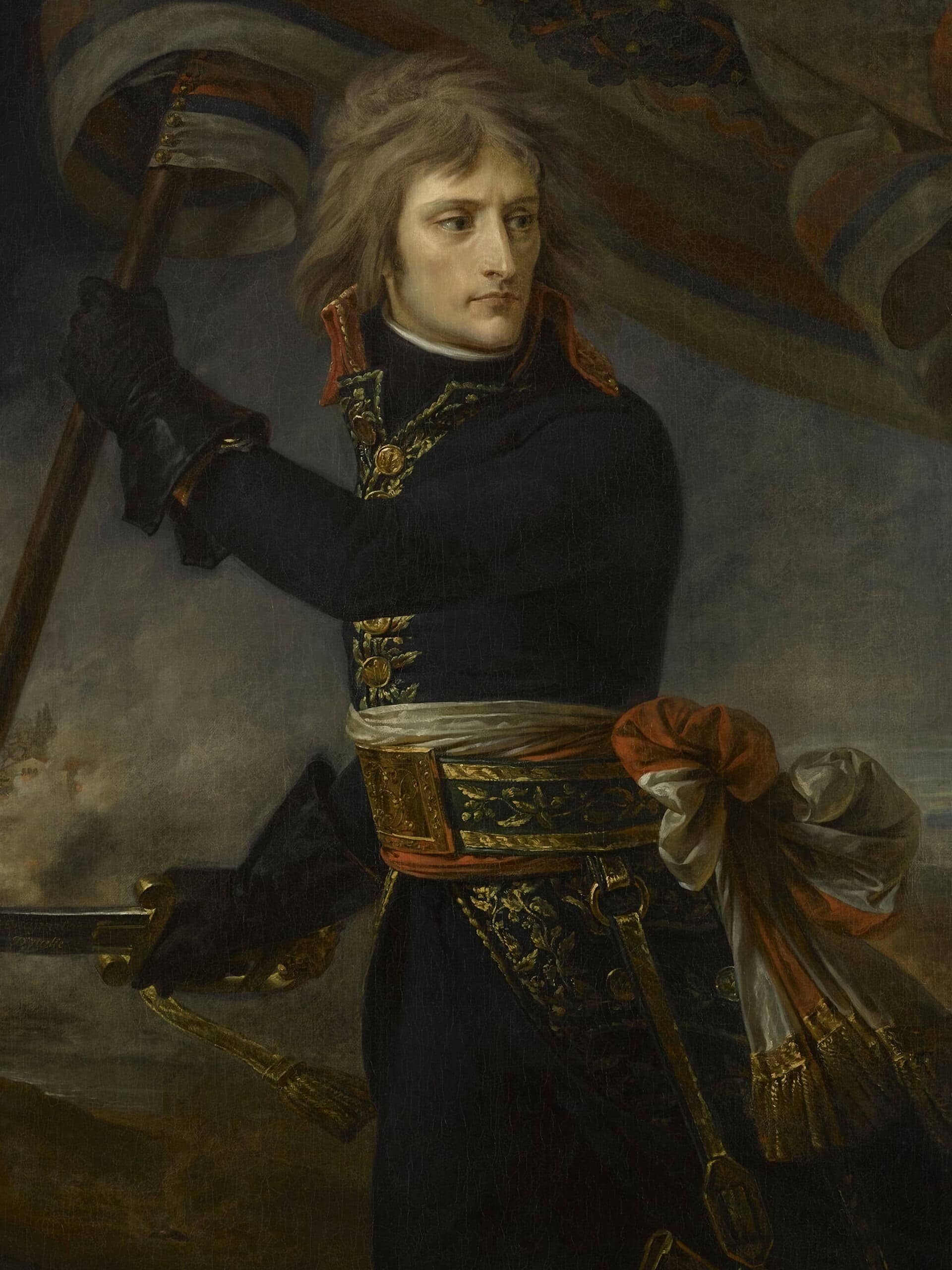
Antoine-Jean Gros (1771–1835)
Bonaparte at the Pont d’Arcole, 17 November 1796. Oil on canvas, 130 × 97 cm (Musée du Louvre, Paris).
The 5° Of Newness
Five Systems For Becoming Harder To Compare, Easier To Cite, And Impossible To Flatten.

Stephen Shaw
Streams compete. Systems compound.™, 2026. Digital tempera-style painting.
The 5° Of Newness
The structural reason five independent investments never compound — and the one architecture that makes them.

service
Step 0: Anti-Commoditisation

François Bouchot (1800–1842)
Napoléon signs his abdication at Fontainebleau, 11 April 1814. Oil on canvas, 309 × 222 cm (Château de Versailles, Versailles, France)
The Fontainebleau Protocol
Disruption intelligence and belief-fracture diagnostics for leadership teams that see the shift but risk moving too late.
service
Step 1: Market Disruption Intelligence

Stephen Shaw
The Uniqueness Protocol 2026. Digital tempera-style painting.
The Uniqueness Protocol
Competitive identity architecture for the company that intends to be commissioned, not compared.
service
Step 2: Competitive Identity Architecture

Stephen Shaw
The Quiet Settlement 2026. Digital tempera-style painting.
The Pre-Decision Advantage
Upstream work for the founder naming the field — not those evaluated against it.
service
Step 3: Upstream Market Authority

Stephen Shaw
The Five Architectures Of Canon™ 2026. Digital tempera-style painting.
The Canon Effect
Why some bodies of work compound — and most become a backlog.
service
Step 4: Compounding Publishing Capital

Stephen Shaw
Time did not merely spare the Pantheon. Time authenticated it. 2026. Digital tempera-style painting.
The Compounding Website
Human readers see pages. Machines see a knowledge system.