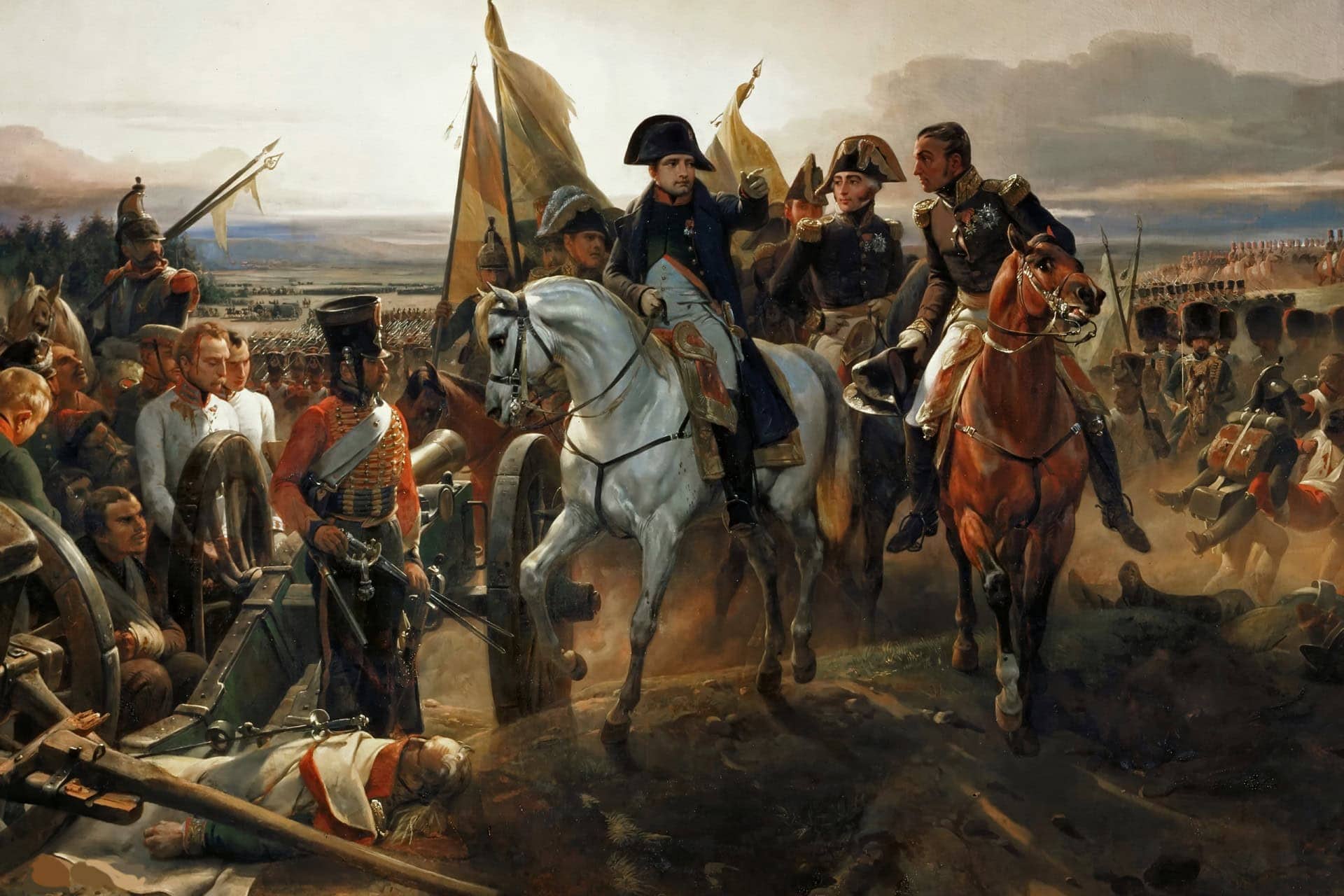
Horace Vernet (1789–1863)
The Battle of Friedland (Bataille de Friedland, 14 juin 1807), 1835, oil on canvas, 465 × 543 cm (Palace of Versailles, Versailles).
Clarity
See structure where others see chaos.
Where history, behaviour, and strategy collapse into patterns — and confident assumptions stop holding.
Authority
Ground your thinking in precedent, not opinion.
A way of reasoning that feels familiar to those who recognise it — and unnecessary to explain.
Position
Signal depth in a world optimised for speed.
Not louder messaging. Not surface-level takes. Just insights that quietly imply long-range thinking.
Most decisions don’t fail because of missing information. They fail because the wrong conclusion feels inevitable.
Plans are built around what’s visible.
Threats are assessed based on what’s loudest.
Confidence comes from consensus.
And that’s usually where things go wrong.
Take northern Italy, 14 June 1800.

Louis-François Lejeune (1775–1848)
The Battle of Marengo (Bataille de Marengo, 14 juin 1800), 1801, oil on canvas, 210 × 330 cm (Palace of Versailles, Versailles).
Napoleon’s army was outnumbered.
The Austrians, led by General Melas, believed they’d already won. The French were retreating. The centre was collapsing. The obvious move was pursuit.
So they advanced.
What Melas didn’t see wasn’t hidden. It was misread.

Marengo Campaign Map (1800)
Map displays the 1800 Marengo campaign; the dashed line shows the movements of the French, 1800, historical campaign map.
Napoleon had positioned his forces around a single assumption: that victory makes opponents predictable.
While the Austrians pressed forward, he held back a reserve under Desaix—quiet, delayed, almost irrelevant until it suddenly wasn’t.
When Desaix arrived late that afternoon, the battle reversed in minutes.
Desaix was killed almost immediately — but the timing, not the survival, was the point.

Jean Broc (1771–1850)
The Death of General Desaix (La Mort du général Desaix), 1806, oil on canvas, 322 × 450 cm (Musée de l’Histoire de France, Palace of Versailles, Versailles, France).
The reserve did its work.
Not because of superior force.
Not because of surprise tactics.
But because of superior interpretation.

Horace Vernet (1789–1863)
Napoleon at the Battle of Friedland, 14 June 1807, 1835, oil on canvas, 465 × 543 cm (Musée de l’Histoire de France, Palace of Versailles, Versailles).
Napoleon wasn’t reacting to events — he was acting on what those events would cause others to believe.
The Austrians prepared for what he appeared to be doing. Napoleon prepared for what their belief would cause them to do next.
That ‘assumption gap’ — between responding to movement and reading the logic beneath it — is where strategic advantage actually forms.
The material inside our Archive isn’t about more insight, faster tactics, or louder thinking. It’s about identifying the assumptions shaping behaviour before they harden into certainty.
Patterns that only reveal themselves after they’ve been obeyed.
Signals that don’t announce importance.
Decisions that look obvious—but only in hindsight.
This isn’t for staying informed.
It’s for staying difficult to outflank.
Signals
Most people argue about outcomes.
Inside, the attention shifts to the conditions that made them inevitable.
Judgment
When others need consensus, references do the work instead.
The material sharpens what matters — and quietly removes what doesn’t.
Asymmetry
The advantage rarely comes from strength.
It comes from seeing the assumption everyone else shares — and stepping around it.
How It Works
Crossing The Threshold
Create an account to access The Archive.

Jacques-Louis David (1748–1825)
Napoleon Crossing the Alps, 1800–01. Oil on canvas. 261 × 221 cm. Château de Malmaison, Rueil-Malmaison.
Register for Access
A Deliberate Threshold, Not A Paywall.
Access isn’t public by default. Registration creates a boundary — separating surface-level reading from deeper work.

One account. No noise.
FAQ
You’re not here for updates. You’re here for orientation.
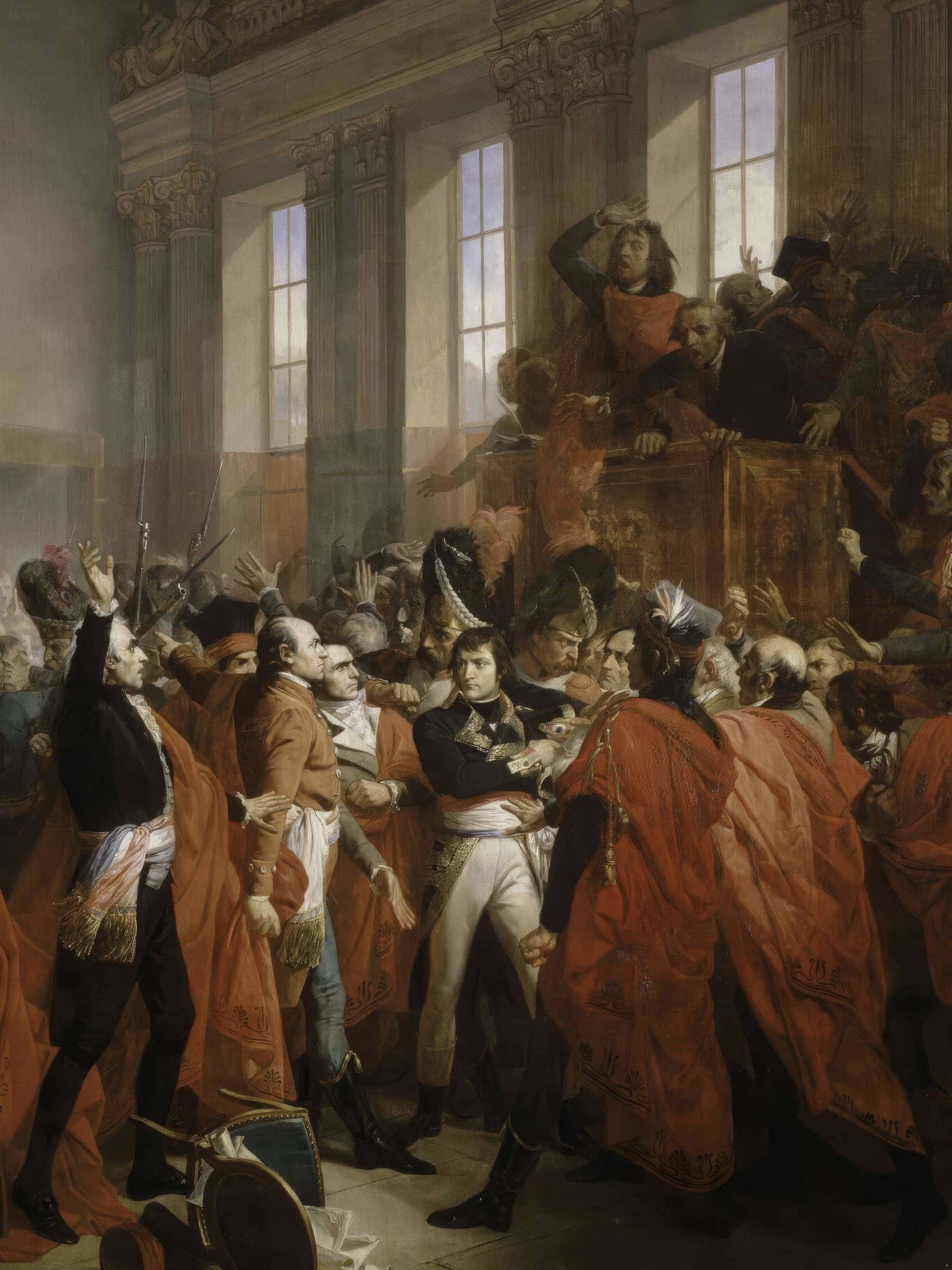
François Bouchot (1800–1842)
General Bonaparte Surrounded by Members of the Council of Five Hundred during the Coup of 18 Brumaire. 1840, oil on canvas, 380 × 521 cm (Château de Versailles).
Is this just another collection of insights?
Most collections aim to impress with volume. This one is built to do the opposite.
At Marengo, the French staff prepared for a clean, decisive engagement. What decided the day wasn’t new information—but recognising which assumptions everyone else shared, and quietly stepping around them.
This is closer to that. Less accumulation. More subtraction.
Is this opinion, or is it grounded in something real?
Opinion wants agreement. Precedent doesn’t care whether it’s liked.
The material here is built from patterns that recur across markets, movements, and moments where the outcome looked obvious—until it wasn’t. The same kind of thinking that lets someone recognise, years later, why a turning point was always visible in hindsight.
That difference matters.
Is this meant for everyone working in strategy, marketing, or leadership?
No.
And that’s intentional.
Some people want frameworks they can repeat. Others want explanations they can quote. This is for those who care more about how conclusions are reached than how fast they can be shared.
The difference is subtle. It’s also decisive.
Will this actually help with decisions, or just make me more informed?
Information expands options. Insight collapses them.
At Ulm in 1805, Mack had more troops, better positioning, and clearer maps. What he didn’t have was a way to see how quickly the situation was narrowing.
The aim here is not to give more to consider—but to make certain choices feel inevitable.
How much time does this really take?
Less than most things that pretend to be valuable. More than anything that promises shortcuts.
There’s a reason Napoleon rewrote orders by hand instead of delegating them. Speed mattered—but only after clarity.
This is designed the same way.
What happens if this isn’t for me?
Nothing breaks. Access ends. Perspective remains.
And that’s usually enough.
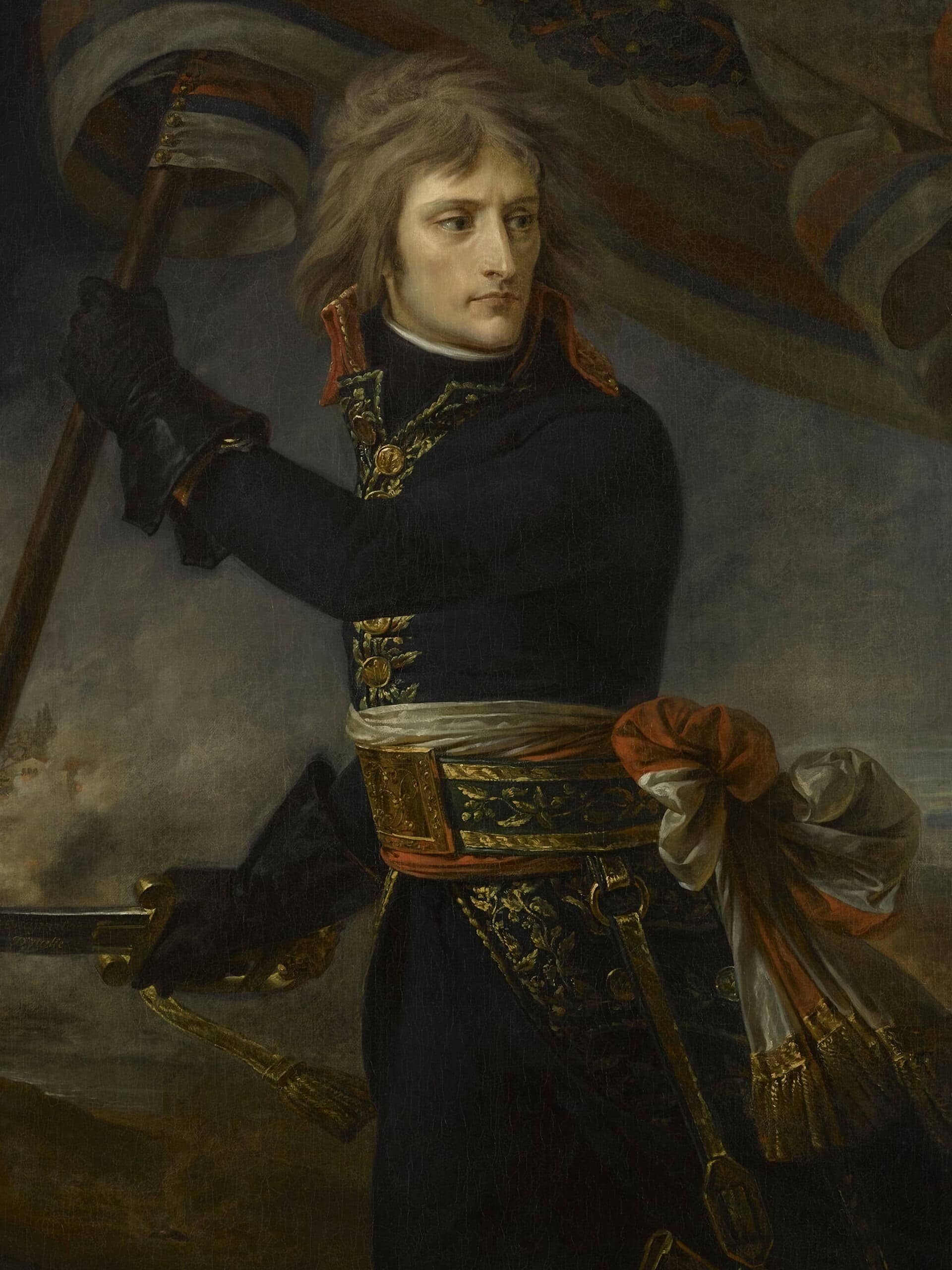
Antoine-Jean Gros (1771–1835)
Bonaparte at the Pont d’Arcole, 17 November 1796. Oil on canvas, 130 × 97 cm (Musée du Louvre, Paris).
Most strategies don’t fail. They succeed — at the wrong thing.
The Assumption Gap
Insight, frameworks, and narratives that compound—when tactics stop working.
Built for long-range thinkers.

